Deterministic parsing
Physical indentation defines block structure, and inline scanning precomputes delimiter and bracket pairs instead of rescanning failed matches.
Zero-backtracking inline scanning, a typed AST, staged plugins, and semantic HTML rendering.

import { parseFluxMark, renderToHTML } from 'fluxmark'
import 'fluxmark/styles.css'

const source = `# Release notes
  FluxMark renders [structured content|b] to semantic HTML.
  * [x] Parse the document
  * [ ] Publish the package
`

const ast = parseFluxMark(source)
const html = renderToHTML(source)

console.log(ast.children.length, ast.issues, html)Install FluxMark and run the first example, or read the language syntax.
The Playground runs the compiler in the browser and shows semantic HTML and the transformed AST for the same source.
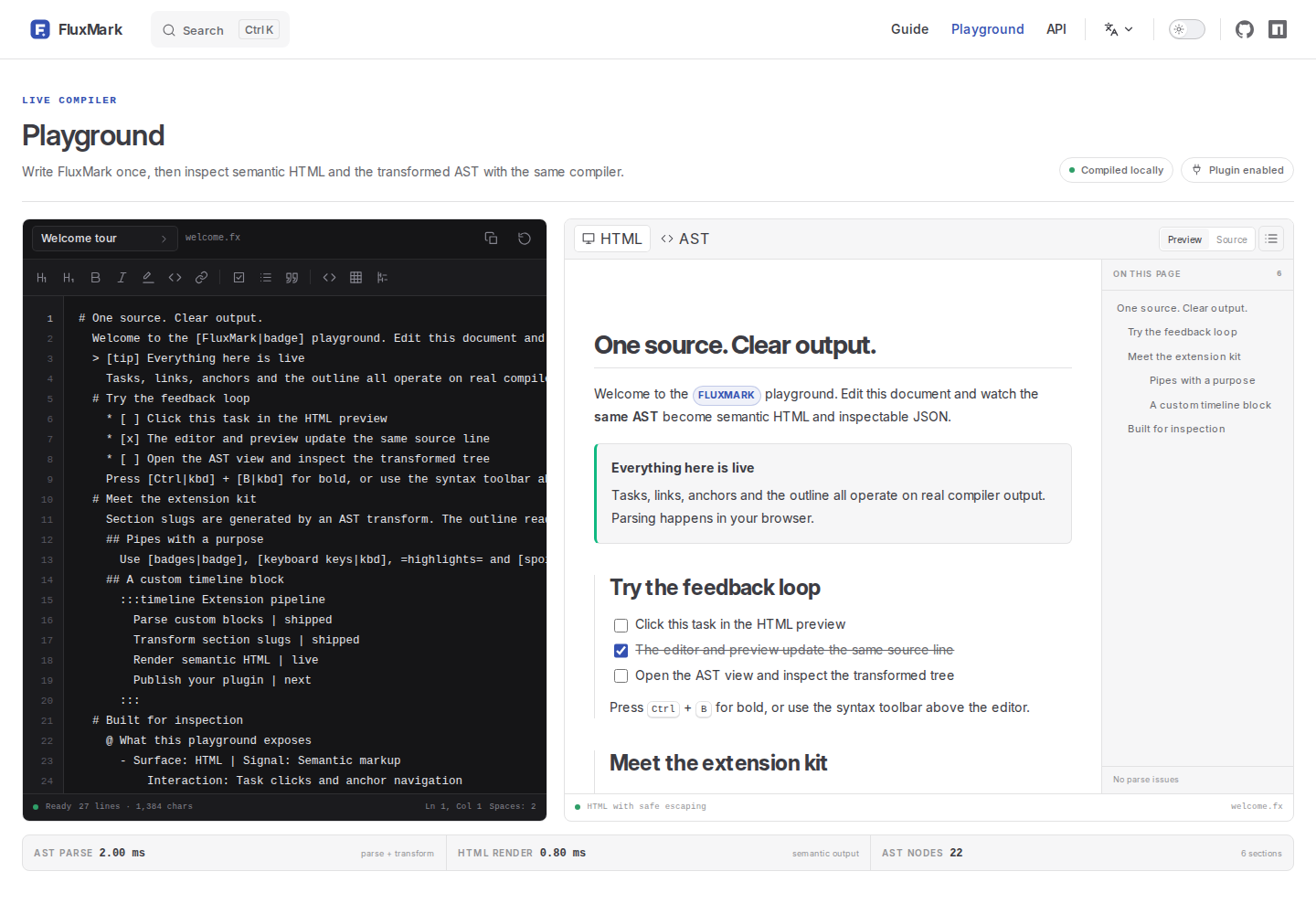
Open the Playground to edit the source and inspect each output.